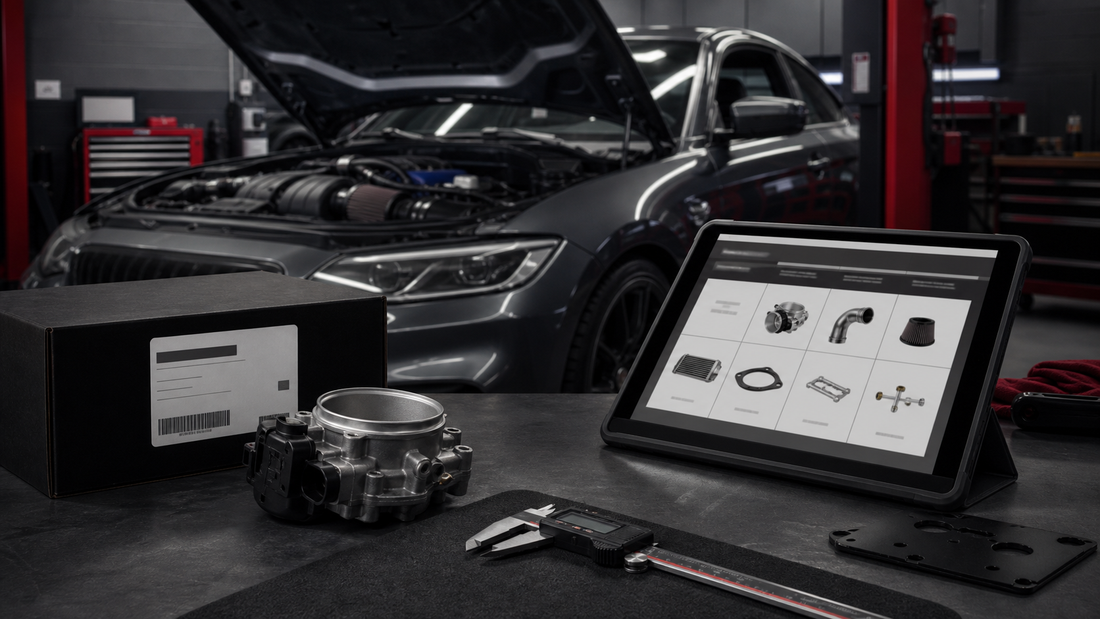
A cold air intake generally routes the filter or inlet toward a cooler outside-air source, while a short-ram intake uses a shorter path and often places an exposed filter inside the engine bay. Neither layout is automatically superior. The correct choice depends on the exact vehicle, airbox and heat-shield design, sensor strategy, weather exposure, available space and whether the product is engineered for the factory calibration.
Key takeaways
- Cold-air designs prioritize isolation from engine heat but can add routing complexity.
- Short-ram designs prioritize compact packaging and induction sound but may ingest warmer air at low speed.
- Vehicle-specific engineering matters more than the category name.
- Confirm MAF compatibility, emissions requirements and water protection before ordering.
How the layouts differ
A cold air intake may use an enclosed airbox connected to a grille or fender feed, or position the filter farther from major heat sources. A short-ram system usually replaces part of the factory path with a compact tube and filter close to the throttle body or turbo inlet. Actual products exist between these definitions, so inspect the physical design rather than relying solely on the title.
| Decision factor | Cold air intake | Short-ram intake |
|---|---|---|
| Inlet location | Cool-air feed or isolated enclosure | Usually inside engine bay |
| Path length | Often longer | Usually shorter |
| Heat exposure | Lower when sealing works properly | Potentially higher at idle and low speed |
| Water exposure | Can be higher with very low filter placement | Usually lower due to higher placement |
| Sound | Varies with enclosure | Often more noticeable |
| Installation | May require more panels or duct routing | Often more compact |
Intake-air temperature
Cooler air is denser, but the temperature reaching the engine depends on vehicle speed, engine-bay airflow, heat soak, intercooling on forced-induction vehicles and the complete route. An open short-ram filter can see warmer air while stationary. Once moving, a shielded design with a strong outside-air feed may behave differently.
Do not rely on a single temperature screenshot or an unrelated vehicle test. Useful comparisons require the same vehicle, operating conditions, sensor location and repeatable procedure.
Airflow and response
A short path can reduce bends or volume, but restriction depends on tube area, transitions, filter, sensor housing and engine demand. A longer system can still flow effectively when engineered properly. On MAF-equipped vehicles, changing housing dimensions or airflow near the sensor can affect measured load and fuel control.
Choose products with documented application compatibility. Some are intended for the original calibration; others require tuning. Never assume that a physically fitting tube is electronically compatible.
Sound differences
Short-ram systems frequently expose more induction noise because the filter is open and factory resonators are removed. A sealed cold-air box may be quieter, although it can still increase throttle or turbo sound. Sound is a preference, not evidence of power.
Water, debris and weather
A filter located low in a bumper or fender can face splash, standing water and road debris. Inspect splash shields and drainage, and avoid driving through water regardless of intake type. A short-ram filter is usually higher but may collect underhood dust or oil mist depending on the engine bay.
Filter maintenance should reflect the environment. Follow the exact dry or oiled media instructions and inspect more often in dusty, wet or off-road conditions.
Heat shields and airbox sealing
A thin shield that leaves major gaps may not isolate the filter effectively. Look for barriers between the filter and radiator or exhaust heat, sealing against the hood where designed, and a clear source of outside air. Mounting should prevent the box and tube from rubbing nearby components.
Emissions and legality
Rules vary by jurisdiction and application. Verify current documentation for the exact part number and vehicle. A similar-looking product or approval for another engine is not proof of compliance. Products described for competition use should be used only as permitted.
How to choose the right intake for your vehicle
- Confirm year, make, model, generation, engine, drivetrain and trim.
- Match the manufacturer's exact part number and application notes.
- Determine whether tuning is required and how the MAF or other sensors are accommodated.
- Inspect the filter location, airbox sealing and cool-air feed.
- Consider rain, road debris, dust and maintenance access.
- Check clearance from the hood, fans, belts, exhaust and wiring.
- Verify current emissions requirements and product documentation.
Which layout fits which driver?
A vehicle-specific cold-air system is generally attractive when temperature isolation and a complete enclosed appearance are priorities. A short-ram system can suit an owner who values compact installation and stronger induction sound, provided heat management and sensor compatibility are addressed. On some platforms the best design combines a short path with a sealed factory-style airbox.
Common mistakes
- Buying a universal kit without measuring or checking sensor requirements.
- Assuming open filters always flow better.
- Ignoring low-mounted filter water exposure.
- Leaving airbox seals or splash panels out after installation.
- Comparing advertised gains from different vehicles or test methods.
- Using the wrong filter-cleaning process.
Compare options in the FSP cold air intake collection and the broader air intake systems collection. Confirm application and manufacturer part number before purchase.
Frequently asked questions
Is a cold air intake always better than a short ram?
No. Design quality, sensor behavior, sealing and vehicle packaging determine the outcome.
Which one is louder?
An exposed short-ram filter is often louder, but enclosure and vehicle design can change the result.
Will either require a tune?
It depends on the exact product and vehicle. Follow the manufacturer's documentation.
Can a cold air intake ingest water?
Low-mounted filters can have greater exposure. Maintain splash protection and never drive through standing water.
Fitment and safety note: Verify every sensor connection and keep the intake clear of heat and moving parts. Diagnose warning lights or drivability changes rather than continuing to operate the vehicle.